What exactly does the regulation say about single-dose packaging in restaurants?
To understand how to act, we must first be very clear about the legal framework. The great transformation of the sector is driven by Regulation (EU) 2025/40 of the European Parliament and of the Council of 19 December 2024 on packaging and packaging waste (internationally known by its English acronym, PPWR).
Unlike European directives—which require each country to draft its own national law to implement them—community regulations are rules of direct and immediate application. This means that on August 12, 2026, the ban will come into force all at once throughout the European Union, without the Government of Spain being able to postpone, modify, or dilute it. It is a firm mandate for all hospitality, restaurant, cafeteria, and tourist accommodation operators.
The calendar for the sustainable transition
The European Union does not stop in 2026. Regulation 2025/40 designs a progressive and phased roadmap that seeks to completely eradicate unnecessary packaging and single-use plastics in the coming decades. As business owners in the sector, we must know these key dates to anticipate operational investments and avoid accumulating obsolete stock in the warehouse:
August 2026 (General Application): Total ban on the use of single-use plastic single-dose packaging for food and beverages consumed inside hospitality establishments (dining room, bar, terraces). Entry into force of strict limitations on harmful chemical substances in packaging (such as PFAS).
February 2027 (The right to refill and sanctions): Deadline for Member States to establish their own specific penalty regimes for those who violate the rule. In addition, the obligation comes into force for venues to allow the customer to bring their own reusable container for takeaway food or drinks, having to offer the service under price conditions that are no less favorable (and informing them of this visibly).
February 2028 (Mandatory offer of reusables): HORECA establishments offering takeaway food will be required to provide customers with an alternative of reusable packaging under a deposit, return, and refund system (micro-enterprises with fewer than 10 employees or low turnover will be exempt). The rule prohibiting empty space in transport and collective packaging from exceeding 50% comes into force.
January 1, 2030 (The disappearance of hotel miniatures): The ban expands massively. The commercialization of single-use plastic packaging for personal hygiene and toiletry products in the accommodation sector (the traditional mini-format amenities of shampoo, gel, or lotion of less than 100 ml) is prohibited. They must be replaced by fixed refillable dispensers in showers and bathrooms.
February 2032 (General evaluation): The European Commission will carry out a comprehensive technical review of the impact of the measures to evaluate the implementation of new restrictions on other single-use formats.
The prohibited products in the dining room and the exceptions we must take advantage of
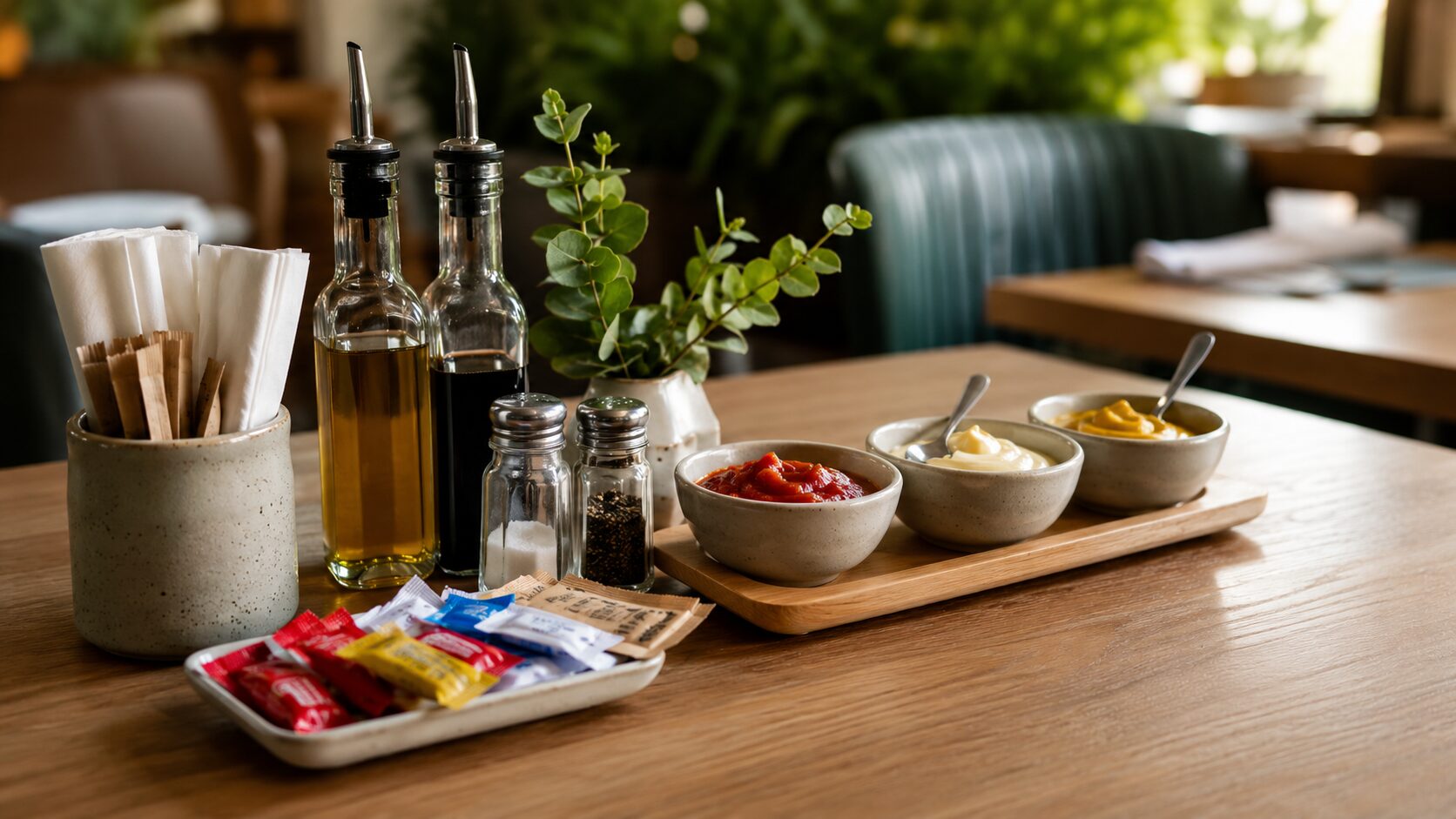
The ban focuses on the eradication of single-use plastic intended for the customer’s table. The legislative text is extremely clear in its typology. As of August 2026, if a diner consumes inside your establishment (dining room, bar, private rooms, or serviced terrace), you will not be able to provide them with any of the following individual formats if they contain traditional plastic:
Plastic tubs for coffee milk (very common in breakfasts and hotel cafeteria service).
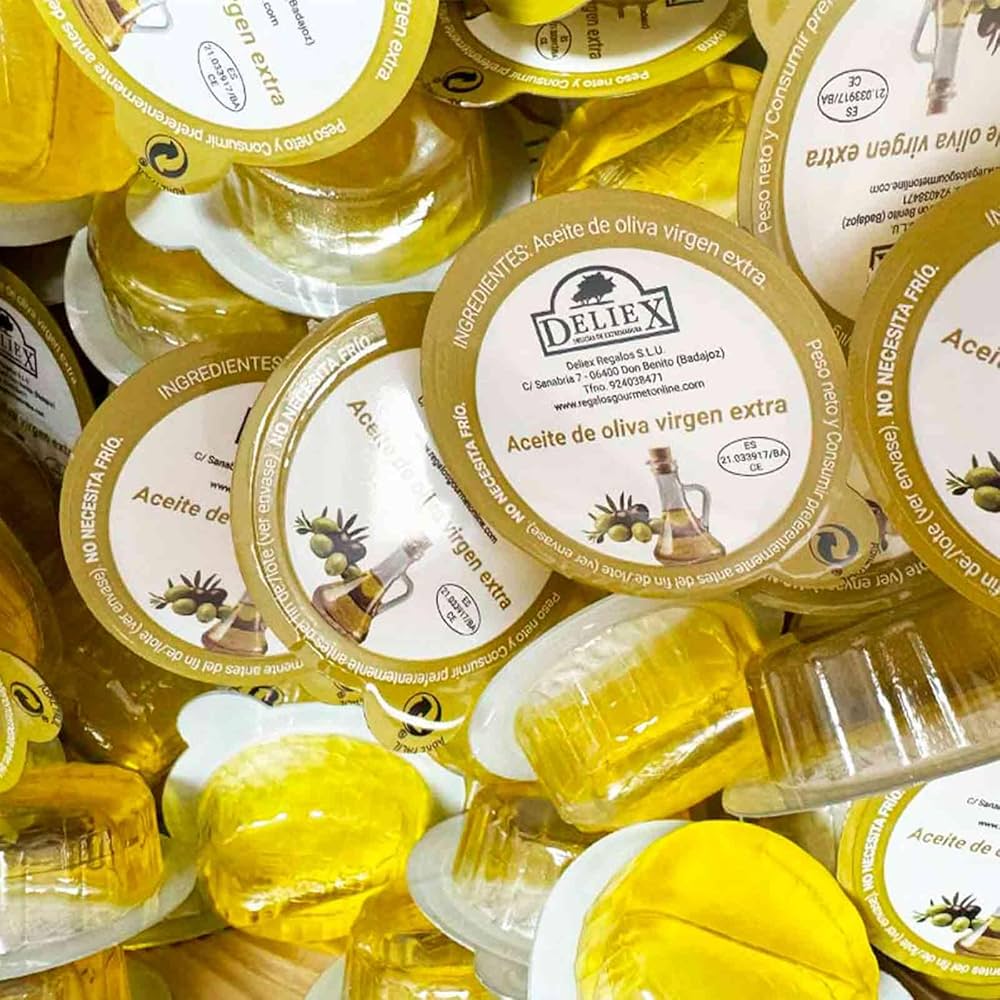
Plastic sachets for sauces, condiments, and dressings (ketchup, mayonnaise, mustard, salsa brava, Caesar dressing, vinegar, etc.).
Individual portion plastic tubs for butter, jams, honey, margarine, or spreads.
Sugar, sweetener, salt, pepper, and spice sachets that use plastic layers or synthetic internal coatings to prevent moisture.
Legal exceptions: The lifesaver of your operations
Fortunately, Brussels legislators have left a series of loopholes that allow structuring daily operations without breaking the law. As practical consultants, we always insist to our clients that the key to profitability lies in mastering these exceptions:
Take Away and Delivery: The regulation explicitly excludes orders that the customer consumes off-premises. In delivery bags or takeaway orders, traditional plastic single-doses of sauces, dressings, or oils can continue to be used completely legally. This avoids food safety and conservation issues during the transport of hot and fatty foods.
100% paper sachets: The ban specifically affects single-use plastic. If you serve sugar, salt, or pepper sachets made exclusively of paper or unplasticized cellulose, your dining room service is fully compliant with the law. Industrial suppliers are already adapting to offer papers with natural and biodegradable greaseproof barriers.
Certified compostable plastic (In Spain, until 2030): Thanks to the transitional provisions of the Waste Law 7/2022 in Spain, venues can continue serving single-doses in the dining room if they are made of industrially certified compostable plastics (suitable for the organic waste bin). It is a very valuable four-year extension for large fast-food chains to amortize their current packaging machinery.
Health and care environments: Healthcare centers, hospitals, medical clinics, and nursing homes are completely exempt from this restriction for obvious reasons of asepsis, clinical hygiene, and strict control of personalized diets and allergens.
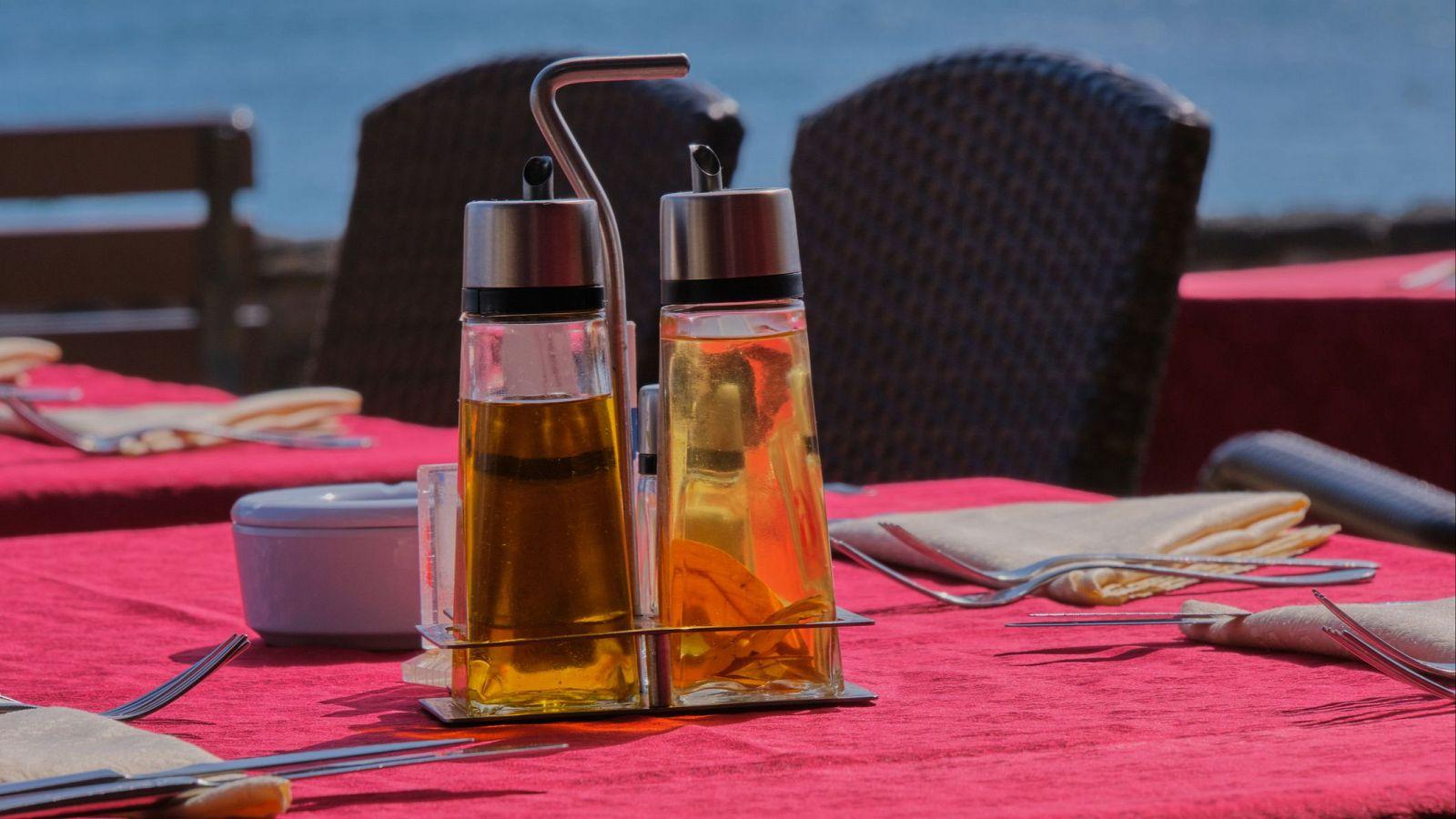
The olive oil labyrinth: Non-refillable cruets vs. sustainability
If there is one product that generates real legal headaches for restaurateurs in Spain, it is olive oil. In our country, table oil service is governed by very strict previous regulations that clash head-on with the new trends in packaging reduction.
The olive oil law in Spain: Ban on traditional cruets
Since January 1, 2014, Royal Decree 895/2013 (consolidated in the more recent Royal Decree 760/2021 on the quality standard for olive oils) strictly prohibits the use of traditional refillable cruets in any hospitality, restaurant, or catering establishment.
The reason for this historic ban is twofold: on the one hand, to protect the consumer against food fraud (avoiding the traditional “refilling” of branded bottles with lampante or low-quality olive oils); on the other, to ensure that the oil keeps its nutritional, antioxidant, and flavor properties intact, which degrade quickly due to light and oxygen if the container is not…
Under this national regulation, all extra virgin, virgin, or refined olive oil made available to the diner at the table or bar must mandatorily meet two requirements:
Have full labeling showing the commercial brand, origin, batch, and best before date.
Be equipped with a tamper-evident and non-refillable opening system that loses its integrity after the first use. The most common authorized systems are internal ball valve dispensing caps (anti-refill) and bottles with special threaded necks equipped with Pilfer Proof safety closures (the classic metal ring that irreversibly breaks on the first twist).