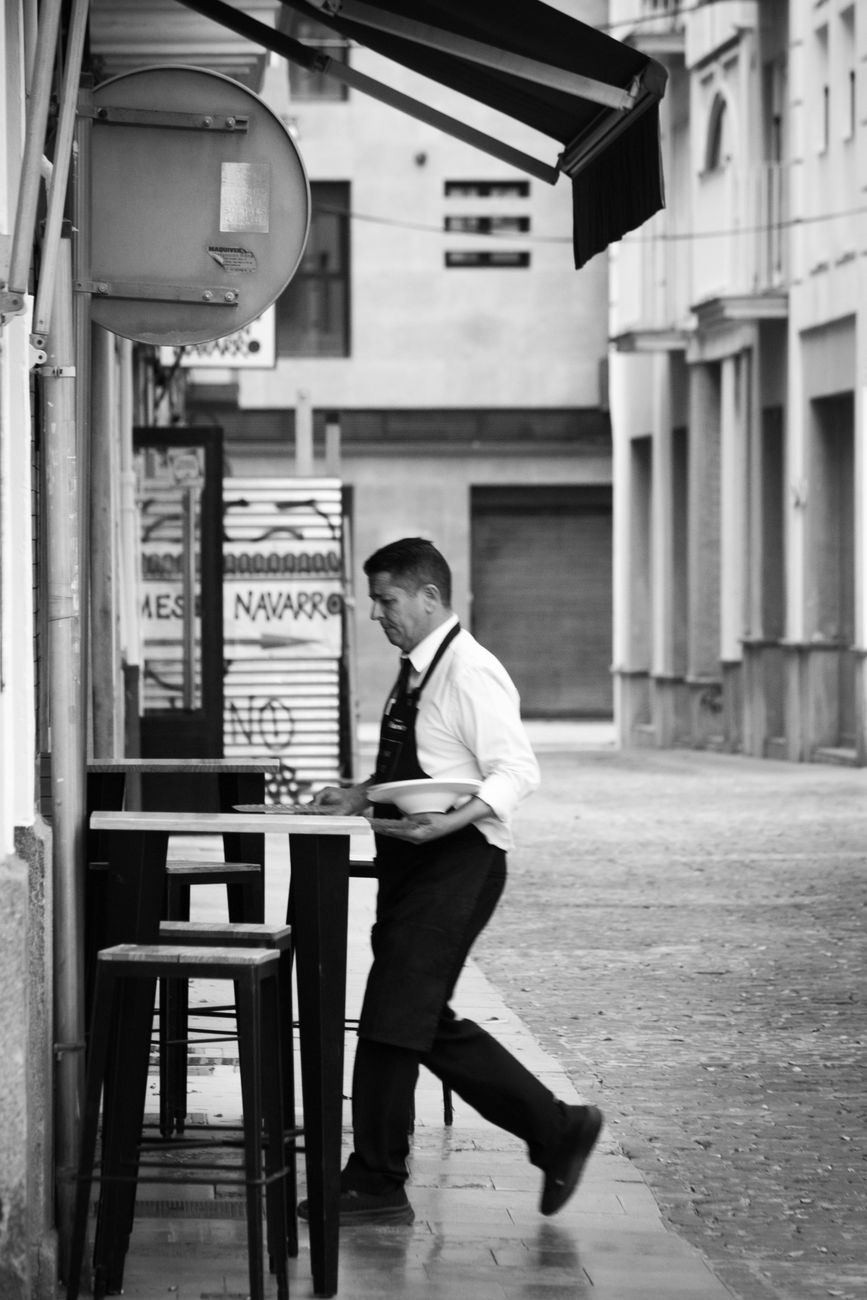
There is a scene repeated in thousands of establishments in Madrid, Barcelona, and Valencia: it is six in the evening, the terrace looks healthy with several tables occupied by customers consuming coffee, beer, or a light snack, and the owner observes the activity with a mixture of relief and resignation.
However, beneath that surface of apparent dynamism lies a devastating accounting reality. At the end of the month, despite the shutters always being up and a constant flow of people, the income statement shows a meager net margin or, in the worst cases, persistent operating losses. This phenomenon, dubbed “the open door paradox,” is a symptom of management based on gross turnover rather than net profitability.
This technical report breaks down the financial and operational mechanisms that turn non-stop hours into a liquidity trap for the independent restaurateur. Through an analysis of sector data from 2025 and 2026, and the methodology applied by specialized consultants like (https://www.thebarbarconsulting.com/), it is evident that opening during “dead hours” usually generates an increase in Prime Cost that no marginal afternoon sale can compensate for.

The trap of poorly executed “Dayparting”
Dayparting is the technique of dividing the day into segments and adapting the offering to each one. Although it is a powerful tool, its poor execution is what is ruining many restaurants.
Opening at five in the afternoon while offering the same menu as at two is a serious operational error. Traditional restaurant dishes have preparation times and labor costs that do not fit with the quick and light consumption of the afternoon.
To prevent non-stop hours from being a disaster, the establishment must change its identity in the afternoon, becoming a snack bar or a functional café, which requires a very solid brand so as not to confuse the customer.
Why do afternoon incentives fail?
Many owners try to attract people in the afternoon through aggressive discounts or Happy Hours. Without a prior recipe cost analysis, these promotions usually attract a customer who consumes resources (space, light, service) but leaves a negative net margin after taxes and variable costs.
The Bar N’ Bar recommends using POS technology to identify if these promotions are actually attracting new customers or simply cannibalizing the spending of regular customers who are now paying less for the same thing.

The structure of Prime Cost: The executioner of dead hours
The fundamental indicator to evaluate whether non-stop hours make financial sense is the Prime Cost. This ratio combines the cost of raw materials (Food & Beverage Cost) with personnel costs, including salaries and social security.
In a healthy business model, the Prime Cost should fluctuate between 55% and 60% of net turnover.
The rigidity of labor costs in Spain
In Spain, the hospitality collective bargaining agreements for 2025 have consolidated progressive salary increases (an average of 4% per year) and stricter regulation on time tracking and overtime.
Keeping a restaurant open from 4:00 PM to 8:00 PM requires, at a minimum, the presence of a cook, a waiter, and a shift supervisor.
Even if these employees are in a low-activity time slot, their hourly cost to the company is constant and even higher if night shift bonuses or the complexity of managing split shifts—which modern talent systematically rejects—are considered. The personnel-to-sales ratio during these hours usually skyrockets above 70% or 80%, making the total Prime Cost for that time slot far exceed 100% of the revenue generated.
The impact of Food Cost on afternoon snacks and appetizers
There is a misconception that selling coffee or beer in the afternoon is “pure profit” due to the low unit cost of the raw material. However, an analysis from (https://www.thebarnbarconsulting.com/como-calcular-la-rentabilidad-de-un-negocio-de-hosteleria/) reveals that these products require a massive turnover volume to cover the opportunity cost of space and personnel.
Furthermore, keeping a kitchen open all day increases the risk of waste. Fresh products prepared for the lunch service lose their organoleptic properties after several hours on the service line, resulting in food waste that inflates the variable Food Cost.