Imagine the scene: it’s a Saturday night at your venue. The bar is packed, tickets are flying, the floor team is running at full speed, and the clinking of glasses makes you think that this month you are finally going to break the market.
However, the thirtieth day arrives, you open the company bank account, and that supposed massive success is nowhere to be found.
You are left with a strange feeling, a mix of physical fatigue and financial frustration. How is it possible that while working harder than ever, the register barely covers the usual expenses?
The answer is no third-year economics mystery: your business is bleeding out due to invisible waste, poorly calculated prices, and, above all, a menu saturated with products that have an extremely high raw material cost and a ridiculous contribution margin.
Many bar and restaurant owners in Madrid or Barcelona believe that salvation lies in getting more people through the door or buying extremely expensive, state-of-the-art hospitality machinery.
But the harsh reality is that volume deceives and chaos entertains: if you sell a lot but with survival margins, you are only accelerating the closure of your venue.
What if we told you that the key to fixing this imbalance doesn’t require you to double your shifts or get lost in a labyrinth of operational renovations? There is a drink that is revolutionizing specialty coffee bars and the sharpest gastrobars in Spain.
A drink that costs less than one euro to produce, is prepared in less than three minutes, and your customers will gladly pay more than five euros for it thanks to its aesthetics and sophistication.
In this article, we are going to reveal the exact numbers of this liquid gold mine, the physics behind its service, and how you can integrate it into your business so that your terrace afternoons stop being a mere formality and become your biggest driver of net profit.
From the cold of Oslo to your neighborhood bar: the origin of Espresso Tonic
Even if it looks like the latest viral Instagram trend or an eccentricity from the specialty coffee shop on the corner, this invention has more history and science than meets the eye. The origin of coffee and tonic (or espresso tonic) goes back to 2007 in Oslo, Norway. It was born within a team of restless baristas who shortly after would found the legendary Swedish firm Koppi Roasters, by the hand of Anne Lunell and Charles Nystrand. What started as an afternoon experiment to refresh the local staff was formally baptized on their Helsingborg menu as Kaffe & Tonic.
The mix quickly crossed borders thanks to international barista championships and reached the most avant-garde cities in the world, such as Tokyo, New York, or Melbourne.
In 2019, even British catering giants like Caffè Nero partnered with tonic brands of the caliber of Fever-Tree to sell this drink on a massive scale, proving that it was not a passing fad, but a new afternoon classic.
The chemistry that makes two bitter worlds love each other
Why does something that on paper sounds as shocking as mixing coffee and bitter soda work? The answer lies in the physics of carbon dioxide gas and the chemistry of bitterness.
In traditional hospitality, we tend to think that combining two elements with bitter notes is an organoleptic suicide. However, the bitterness of coffee comes from the organic compounds roasted during the Maillard process in the bean (such as chlorogenic acid lactones). On the other hand, the bitterness of tonic comes from quinine, a natural alkaloid extracted from the bark of the cinchona tree.
Because they belong to different flavor families, your taste buds do not add them together, but rather perceive them as complementary. In addition, tonic brings two saving elements: sugar (which balances acidity and astringency) and carbon dioxide ($CO_2$).
The tonic bubbles perform a physical dragging job: they trap the volatile aromatic compounds of the hot coffee and raise them directly toward the customer’s nose when they bring the glass close.
This causes the fruity, floral, and citrus notes of the coffee (which would be muted in a conventional cold coffee with water or milk) to burst on the palate with an incredible intensity.
For this magic to happen, the choice of coffee bean is non-negotiable:
Specialty coffees with light or medium roast: Beans from origins like Ethiopia or Kenya, with highly pronounced fruity, citrus, and floral notes, pair best with tonic, as their bright acidity is enhanced by the carbonation.
Commercial dark roast or torrefacto coffees: They are the number one enemy of this drink. An over-roasted coffee will bring burnt notes, ash, and a heavy bitterness that, when clashing with the quinine in the tonic, will create a metallic, astringent, and unpleasant drink that your customer will never want to order again.
Major mistakes that ruin your coffee with tonic (and make you lose money)
As hospitality consultants, we always say one thing: it is useless to design the best gastronomic concept if the execution at the bar fails afterwards.
Standardization is the only effective vaccine against service inconsistency and raw material waste.
When serving a coffee with tonic, there are three textbook operational errors that destroy the customer experience and skyrocket your production costs without you realizing it:
1. Violent pouring and foam overflow
This is the most common bar error in the sector.
Freshly extracted espresso coffee has a large amount of suspended solids and lipids that form the crema.
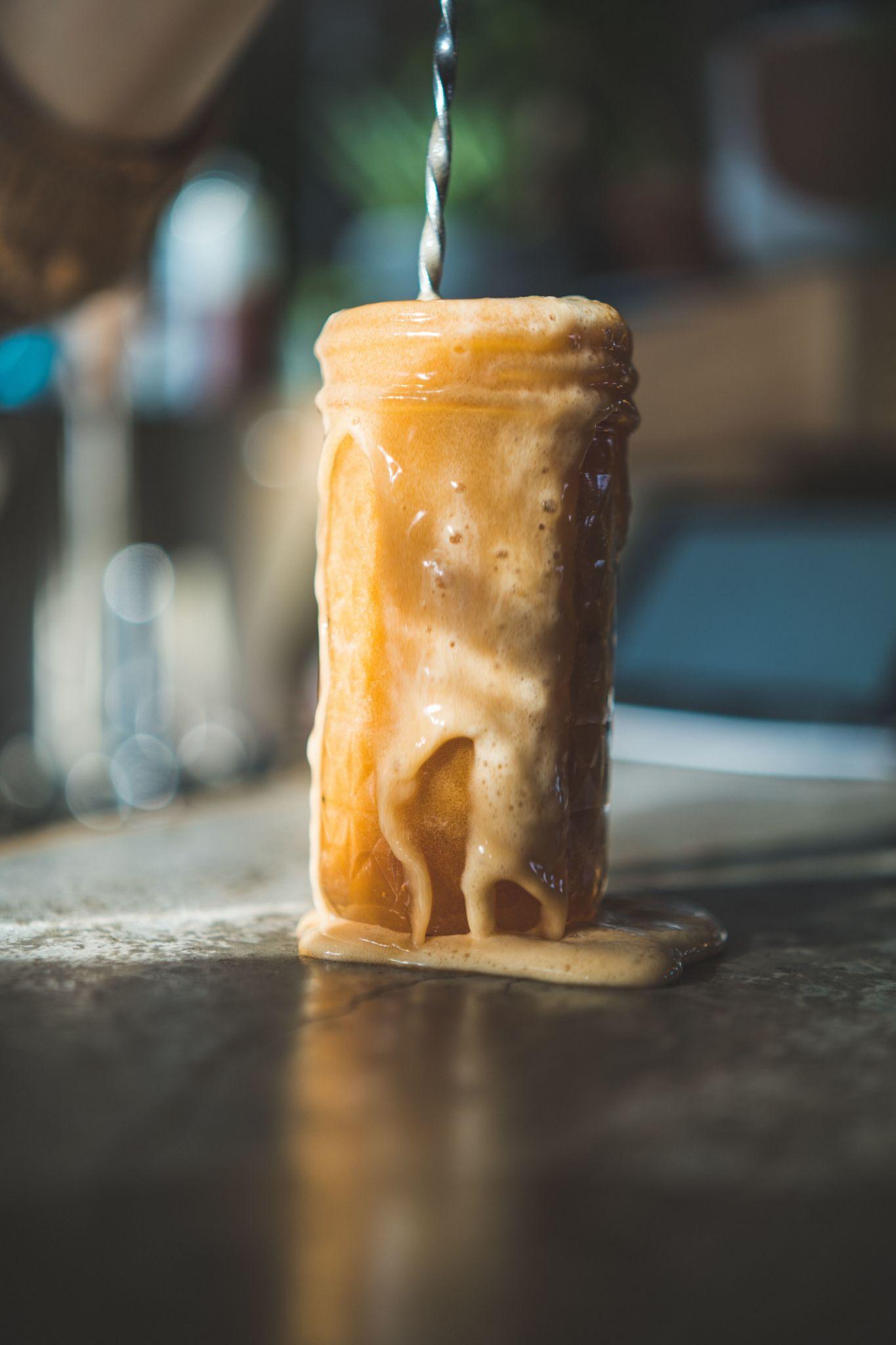
When these hot elements clash with the carbonated soda, they act as thousands of nucleation points that release the carbon dioxide gas from the tonic in a violent and uncontrolled way.
If your barista pours the espresso directly or all at once over the tonic, it will generate an excessive eruption of foam that will overflow the glass, stain the bar, dissipate all the gas, and force you to throw away the drink or present a flat and unpleasant sip.
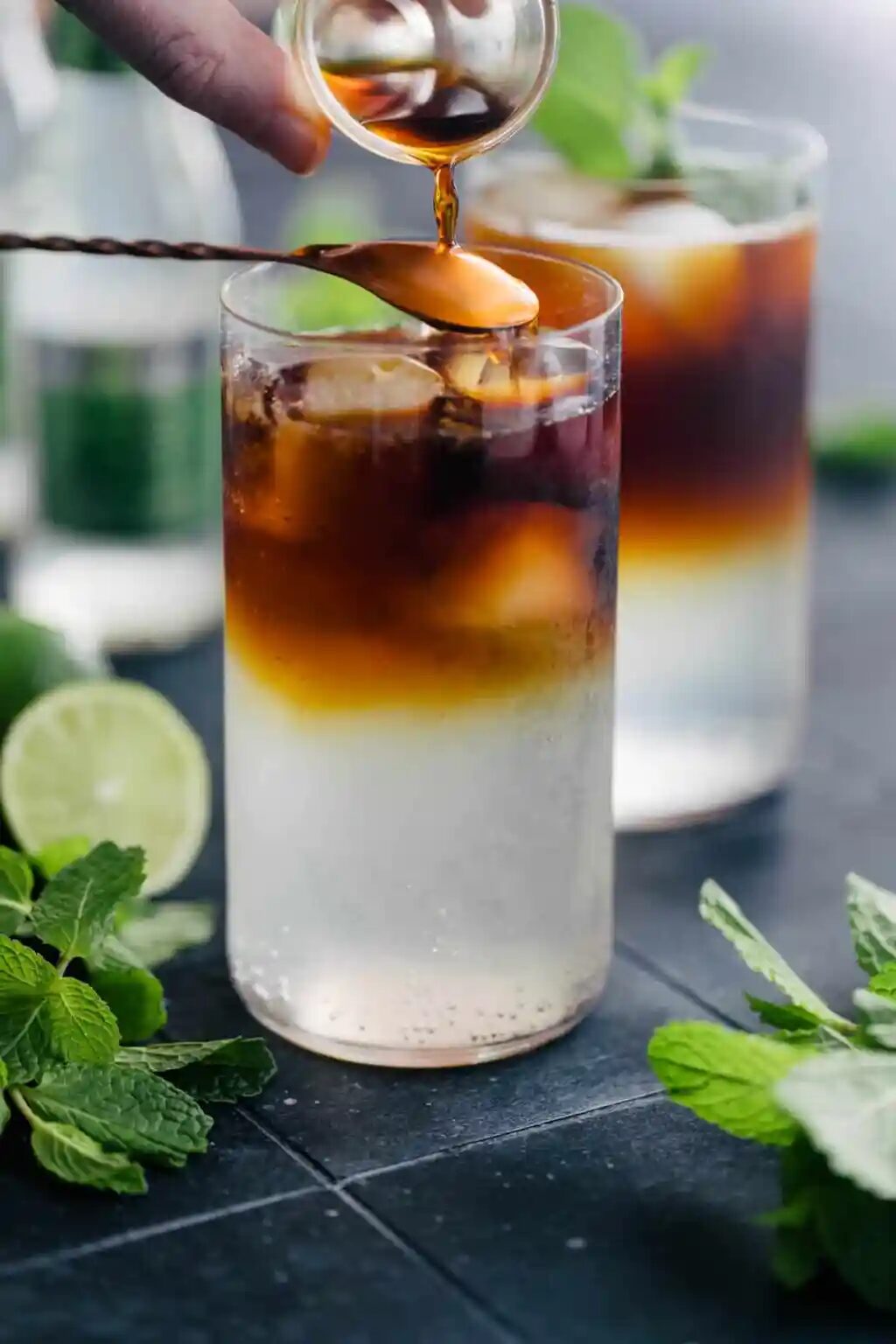
How we fix it: Fill the glass to the top with solid ice cubes. Gently pour the cold tonic first down the side of the glass. Let it rest for a few seconds and, finally, pour the hot espresso extremely slowly, placing the stream of coffee directly onto the top of an ice cube or sliding the flow down a twisted bar spoon. This way you will get a clean drink, with the gas intact and a spectacular visual separation of translucent and dark layers.
2. The use of low-cost soft or hollow ice
Ice is not just an aesthetic element for cooling; it is a structural cocktail ingredient. In many bars, soft, semi-frozen, or hollow ice produced by obsolete machines is used to save on utilities. Huge mistake. Low-quality ice melts instantly upon coming into contact with the temperature of a freshly extracted espresso from the commercial coffee machine.
This uncontrolled dilution does not just cool the drink, it waters it down completely, reducing the flavor of the coffee, neutralizing the bitterness of the quinine, and turning the drink into a tasteless liquid.
How we fix it: Invest in high-density solid cylinder ice (purified water cubes of at least 40 grams). By having a lower surface area-to-mass ratio, this ice will keep the tonic and espresso cold for half an hour with barely any water added to the drink, preserving the intensity of the aromas and the quality of the preparation.
3. Lack of consistency in the bar workflow
If your premium tonic is stored at room temperature instead of being perfectly chilled in the under-counter bottle cooler, the bottle’s carbonation will be lost almost instantly upon opening and pouring it over warm ice.
Furthermore, if your barista has to walk across the bar to look for the tonic, the ice, or the fresh fruit slices, the preparation time will double, creating an unsustainable operational bottleneck during peak hours.
How we fix it: Apply good process architecture following our consultancy’s operational guidelines. Tonic bottles must always be at a constant temperature between 4 and 6 degrees Celsius. Organize your barista station so that the ice, the soda fridge, the coffee machine, and the dehydrated fruit garnishes are at a physical distance that requires at most a one-step movement, reducing your staff’s fatigue and guaranteeing a standardized preparation time of less than three minutes per customer.
Recipes with flair so that no one can copy you
Differentiation is the soul of any solid hospitality concept.
It’s not about offering the same thing everyone else does but ten cents cheaper; it’s about building a unique proposal with soul and personality that makes your customer walk past three venues just to enter yours.
The versatility of coffee with tonic allows us to play with different botanical combinations and signature ingredients to design exclusive recipes with flair:
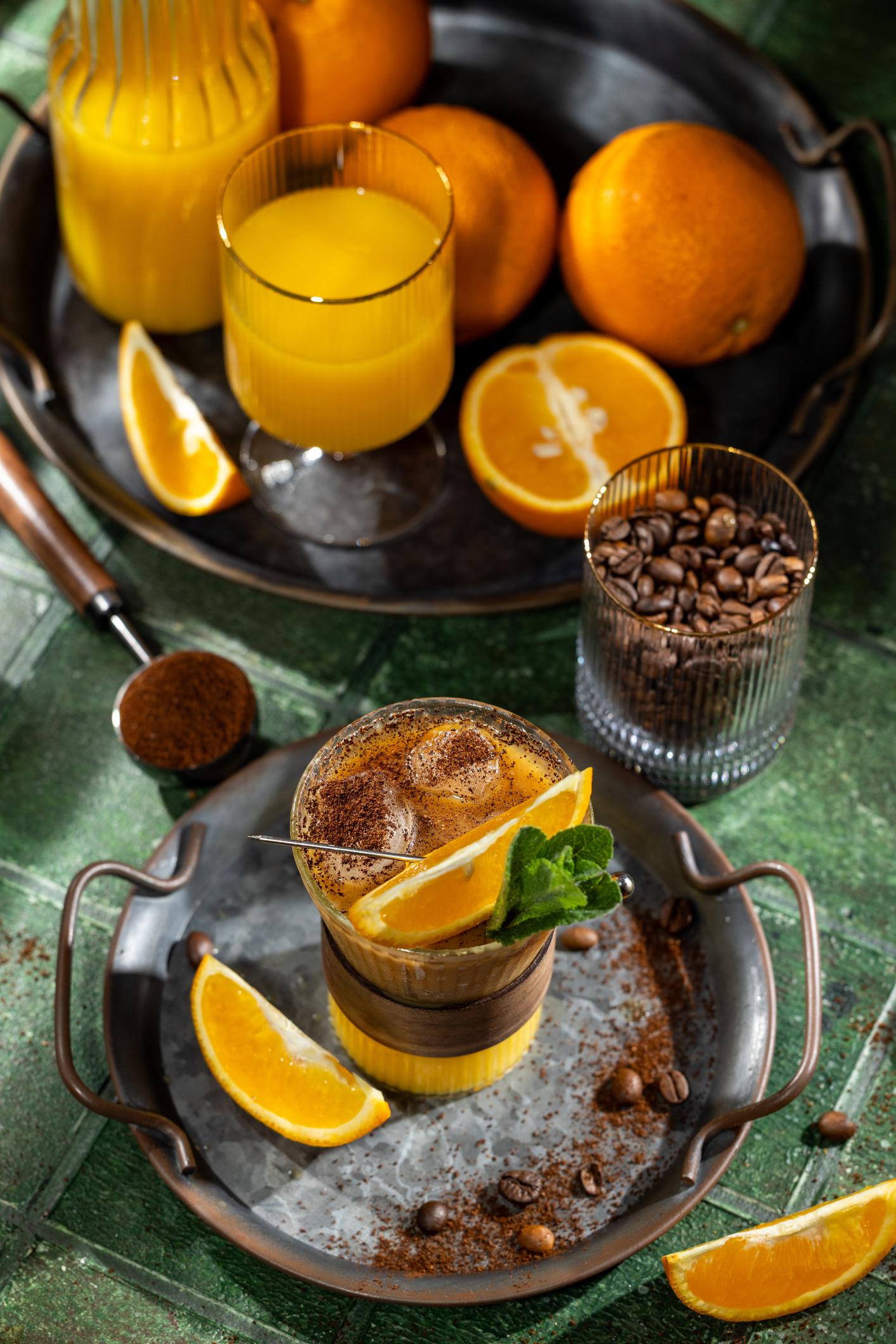
Recipe 1: The Fennel and Wild Orange Espresso Tonic
Inspired by the great affinity that Mediterranean gastronomic culture has for anise and seasonal citrus fruits.
The touch of fennel provides a fresh herbal background that softens the metallic bitterness of the quinine, while the essential oils from the orange peel enhance the fruity acidity of the espresso coffee.
Ingredients:
18 g de café de especialidad de origen Kenia de tueste ligero (extracción doble de 60ml.
150 ml of premium neutral tonic water.
15 ml of homemade fennel and orange syrup (made by simmering equal parts water and sugar with crushed fennel seeds and orange peel strips).
Fresh orange peel for serving.
Solid cocktail ice.
Step-by-step preparation:
Llena un vaso de boca ancha con hielo macizo para que el cristal esté muy frío.
Add the 15 ml of your homemade fennel and orange syrup to the bottom of the glass.
Gently pour the premium tonic water over the ice to maintain the carbonation.
Extract your double specialty espresso and pour it slowly using a bar spoon to support the color layer.
Express the orange peel over the glass to scent the rim with its citrus oils and drop it gracefully inside.
Recipe 2: The Cucumber and Basil Green Garden Cold Brew Tonic
A proposal designed for lovers of clean, green, and herbaceous flavors. By replacing hot coffee with cold-extracted coffee concentrate (Cold Brew), we reduce the initial pouring temperature, avoid accelerated ice dilution, and achieve a much silkier and more floral flavor profile without thermal bitterness.
Ingredients:
80 ml of Cold Brew concentrate (Ethiopian origin, paper-filtered).
120 ml of premium cucumber tonic water (or neutral tonic infused with fresh cucumber).
3 fresh garden basil leaves.
A thin slice of fresh cucumber for the glass garnish.
Solid cocktail ice.
Step-by-step preparation:
Prepare your highball glass and place a long strip of fresh cucumber pressed against the inside glass wall.
Carefully add the solid ice cubes to hold the cucumber in place.
Give the basil leaves a light clap in your hand to wake up their aromas and place them between the ice cubes.
Pour the ice-cold cucumber tonic until you fill three-quarters of the glass capacity.
Pour the cold Cold Brew steadily to create a flawless floating visual contrast.