Imagine it’s Saturday night. In our restaurant, the reservation book has been a resounding “fully booked” for three weeks. We have reinforced the front-of-house team, the kitchen has worked tirelessly on the mise en place to ensure every dish comes out perfectly, and we have turned away at least twenty customers who called at the last minute looking for a spot.
Service begins, the pace is frantic, but suddenly, a table of eight pax doesn’t show up. Fifteen minutes pass, thirty. We call the contact phone and, after several rings, they hang up on us or give us an improvised excuse about a non-existent unforeseen event.
That empty table isn’t just a piece of unused furniture; it’s an open wound in our income statement that, at the end of the month, can be the difference between success and closing down.
But what if we told you that empty table has already cost us money even before the customer decided not to come? In the following pages, we are going to break down the invisible system that allows leading restaurants to not only survive ghost reservations but use them to strengthen their business model.
Stay with us, because what we are about to tell you will change the way you see every empty chair in your establishment.
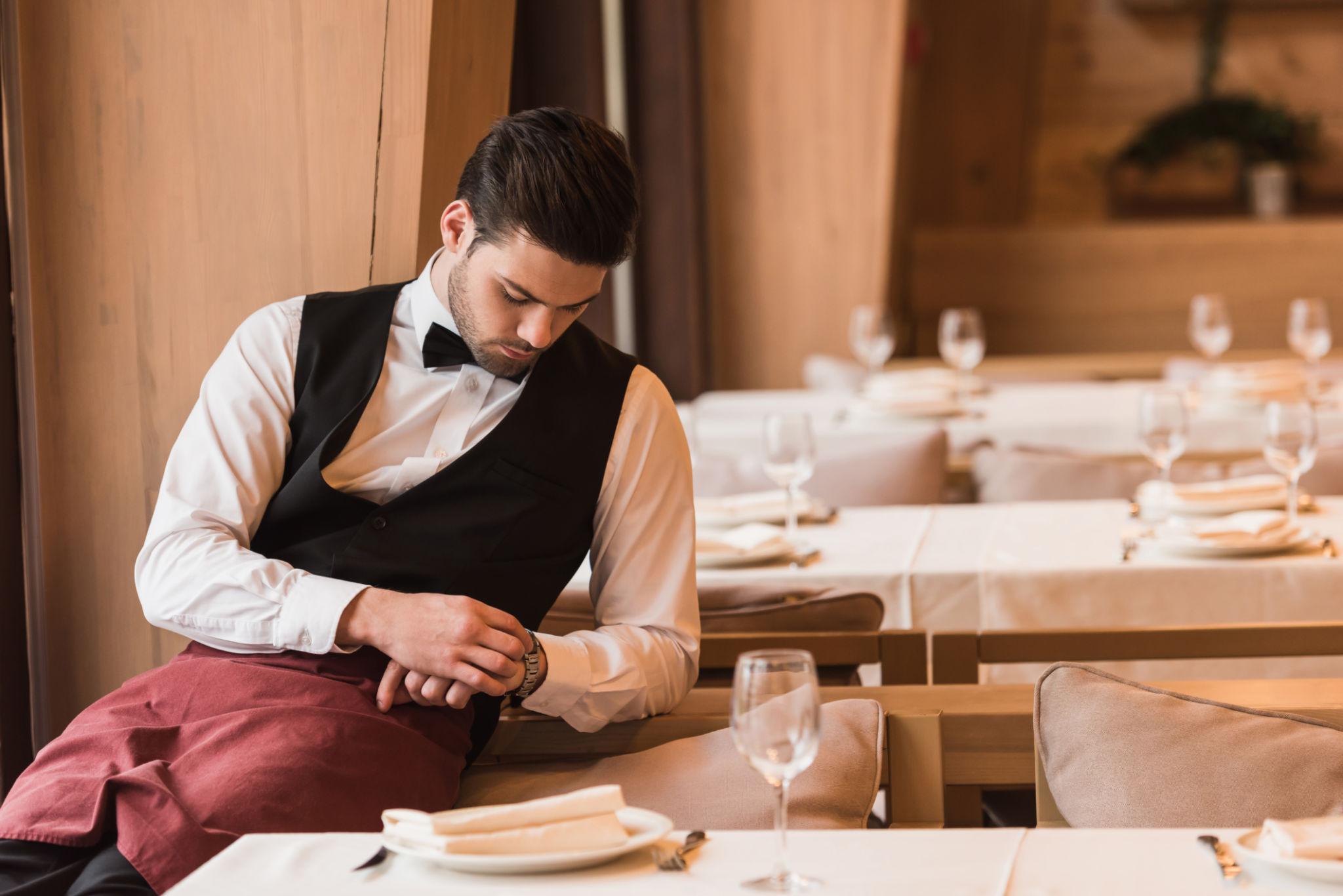
Sunk cost: How much money are we leaving on the table?
To calculate the real damage of a no-show, at our consultancy (https://www.thebarbarconsulting.com/) we use a 360-degree view. It’s not just about the 30 or 40 euros of average ticket that you stop taking in. The impact is cumulative and affects three pillars:
The lost opportunity: This is the income we would have obtained from those customers to whom we said “no” because the table was theoretically occupied. Often, the opportunity loss is greater than the loss of the original sale, especially on high-demand nights.
Inefficient labor cost: We have scheduled staff based on a volume of pax that has not materialized. This skyrockets our labor cost-to-sales ratio, which in a healthy restaurant should be around 30%.
Raw material waste: The kitchen prepares the mise en place for confirmed covers. If those covers don’t arrive, the fresh product—which is expensive and perishable—ends up in the trash, raising our real Food Cost above the ideal.

Stop chasing ghosts and start managing certainties
Ghost reservations are not an inevitable “curse” of our trade; they are an operational inefficiency that has a solution.
In a market as demanding as today’s, where energy and staff costs continue to rise, we cannot afford the luxury of having empty tables due to a lack of system.
Professionalizing the reservation process, educating the customer with proximity, and relying on the right technology will not only save your margins but also elevate the perceived value of your brand.
The customer respects more the restaurant that values its own time and that of its team.
If you feel that your restaurant works harder than your bank account, it’s time to take control.
At (https://www.thebarbarconsulting.com/) we are ready to accompany you in this process, from the first technical sheet to the resounding success of your next service with “all tables truly full.” Because in real hospitality, the only magic we allow is the one that happens inside the plate.

Why don’t we Spaniards cancel our reservations?
According to recent surveys from reservation management platforms, a lack of malice is the general trend, but the lack of support systems in the restaurant worsens the situation.
| Reason for No-Show | / % of cases /Behavior analysis | |
| Forgetting or oversight | 55% | The customer has a frantic life and our reservation is not their priority. |
| Real unforeseen events | 38% | Accidents, health, or last-minute plan changes. |
| Embarrassment to call | 7% | The psychological barrier of giving explanations over the phone is real. |
| Multiple reservations | 15% | The customer secures a spot in 3 venues and chooses at the last minute based on the weather or a whim. |